
Energy-intensive processes and increasing demands in hospitals
Hospitals are true high performers, excelling both medically and in terms of infrastructure. However, this performance comes at a price: according to the German Hospital Federation (DKG), each hospital bed requires approximately 7,800 kilowatt hours of electricity and more than 300 litres of water per day (source: German Hospital Federation, 2025).

Pump systems that run around the clock play a crucial role in hospitals:
- Cooling of operating rooms and medical technology
- Heat and water supply
- Ventilation systems
- Fire water systems
- Sewage disposal
Pumps are the invisible heart of the hospital.
The pressure is constantly increasing: many hospitals are in urgent need of energy-efficient renovation. Rising energy costs and tight budgets are compounded by political requirements such as the EU Green Deal and the EPBD Directive (Energy Performance of Buildings Directive).
At the same time, strict requirements apply to hygiene and security of supply. Drinking water must remain free of Legionella bacteria, radiological equipment requires reliable cooling, and fire-fighting systems must operate without fail. The key challenge, therefore, is to continuously balance cost control, sustainability, and maximum operational reliability.
Increase the efficiency and operational reliability of your hospital infrastructure
Optimise energy consumption and reduce operating costs—without compromising hygiene or the security of supply.
Contact our experts today to learn how modern pump solutions can make your hospital future-proof.
Contact us now
Pump solutions for energy-efficient and resilient healthcare facilities
We understand the specific challenges hospitals face every day: the need to save energy and reduce costs while ensuring reliable care—especially in critical medical areas where patient well-being is the top priority. With intelligent technologies, we help you significantly reduce energy consumption and operating costs, whilst enabling maximum operational reliability.
High-efficiency pumps reduce energy consumption in your hospital by up to 90 per cent compared to older systems, while intelligent control systems adjust operation precisely to actual demand – efficiently, reliably, and with sustainability (Calculation example: Old circulation pump approx. 2,500 kWh/year vs. high-efficiency pump approx. 300 kWh/year. Values depend on the duty point; based on typical load profiles such as the "Blue Angel" standard).
As an experienced partner in the healthcare sector, we offer you comprehensive solutions.
From project planning to maintenance, we cover all central water technology applications—heating and cooling, drinking water supply, pressure boosting, and sewage disposal. These systems are central to your technical infrastructure, making a crucial contribution to the functionality of medical equipment and the safety of patients, visitors, and staff.
Whether for new buildings or modernising existing facilities, Wilo ensures trouble-free, energy-efficient, and sustainable operation—allowing medical staff to focus on what matters most.
Our remote monitoring system Wilo-Monitor provides transparency regarding energy flows, detects faults in real time, and prevents failures through predictive maintenance. Combined with other aftercare services and redundancy concepts, it ensures maximum supply reliability—for even greater operational reliability in everyday hospital life.
With the Wilo-Energy Audit¹, Wilo supports clinics in analysing, optimising, and ensuring the long-term efficiency of their systems. The audit offers an ideal opportunity for rapid efficiency gains, particularly in hospitals in urgent need of energy-related renovation but with limited budgets for major investments.
¹The Wilo-Energy Audit does not comply with the EN 16247-1 standard and therefore does not fulfil the requirement to carry out a legally mandated energy audit in accordance with the relevant national implementation provisions of the EU Energy Efficiency Directive.

Our highlight applications for hospitals
Whether in heating, drinking water, or cooling loops, modern pump systems are central components of efficient building services in hospitals. Precise control and adapted delivery rates can significantly reduce energy consumption and operating costs across all applications.

Cold drinking water circulation
Clean, safe water is a key quality feature of modern hospitals—and crucial for hygiene and trust.
- Prevents stagnation in pipes, reducing the risk of Legionella bacteria
- Ensures hygienically safe drinking water at all times
- Increases comfort and protects the health of patients, staff, and visitors

Heating, ventilation, and air conditioning (HVAC)
A stable indoor climate is essential for comfort, hygiene, and the well-being of patients and staff—from the intensive care unit to the patient room.
- Central application across all hospital areas – crucial for comfort and hygiene
- Pumps for heating and cooling loops and pressure maintenance systems
- Pressurisation stabilises the system pressure in large building complexes with long pipe networks
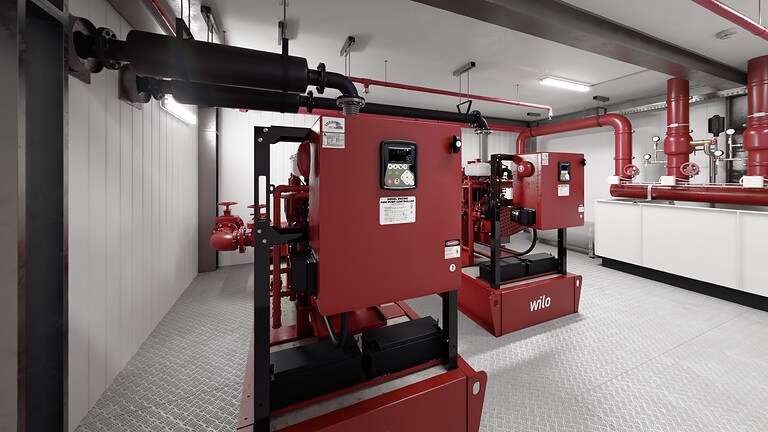
Firefighting
In an emergency, every second counts—that's why reliable fire water systems are essential for the safety of people and facilities.
- Complies with DIN 1988-500 (separation of drinking water) and DIN 14462 (planning and operation of fire extinguishing water systems).
- System separation ensures drinking water quality
- Pressure-boosting systems ensure a reliable supply of fire water
- Particularly important due to stringent safety requirements in hospitals
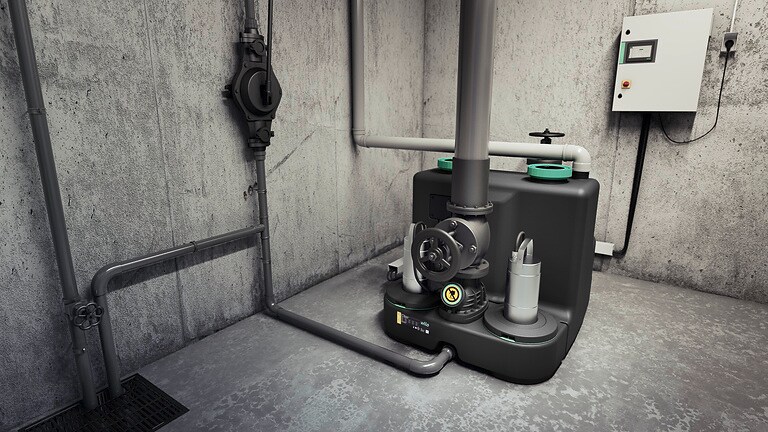
Wastewater collection and transport
Ensuring that operations never come to a standstill: Efficient systems safely drain sewage and protect buildings and technology from backflow or failures.
- Reliable drainage of grey and black water
- Backflow protection safeguards hygienically sensitive areas from contamination and operational interruptions
- Emergency drainage provides operation even in critical situations
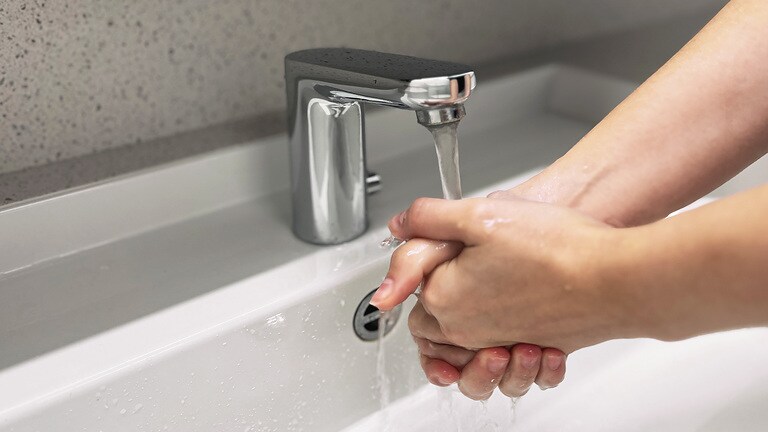
Water distribution and boosting
Whether on the ward, in the control centre, or in the operating room, a stable water supply is crucial for efficiency and safety in everyday hospital life.
- Reliable supply for tall buildings and during peak loads (e.g., morning use, emergencies)
- Consistently maintained water pressure in all areas
- Intelligent control ensures demand-driven supply
Strong references. Energy-efficient hospitals.
Whether it's energy efficiency, operational reliability, or hygienic drinking water, our solutions are already in use at leading hospitals. Discover selected references and learn how we are working with our partners to make healthcare facilities future-proof.

Lüdenscheid Hospital
Lüdenscheid Hospital in Germany employs 1,800 staff and has 900 beds. The heat recovery system cools in summer and heats in winter. Previously, two standard pumps, each with 230 m³ at 110 m and 132 kW, were in use. A Wilo energy audit revealed that a smaller pump with 22 kW and 90 m³/h at 50 m would suffice.
Annual savings:
- Operating costs saved: €30,000
- Energy savings: 152,000 kWh
- Emissions reduced: 94.5 tons of CO₂
- Investment volume: approx. €20,000
- Payback period: < 1 year

St. Franziskus Hospital Münster
For more than 160 years, St. Franziskus Hospital in Münster, Germany, has provided care to patients with diverse medical needs. With around 600 beds, it treats approximately 30,000 inpatients and 60,000 outpatients each year. Facility management needed to ensure an efficient heat and water supply and optimise energy consumption. Over 40 new Wilo high-efficiency pumps with energy-saving functions and control technologies now provide a reliable, energy-efficient supply.
Annual savings:
- Operating costs saved: €8,500
- Energy savings: 42,000 kWh
- Emissions reduced: 22 tons of CO₂
- Payback period: < 5 years

Béziers Hospital
The hospital in Béziers, southern France, has 1,180 beds. The aim was to optimise energy consumption in the boiler room and equip the pumps with a communication system for monitoring. Originally, three pumps ran at full capacity throughout the year, resulting in high consumption. The new pumps offer flexibility and operational reliability.
Annual savings:
- Operating costs saved: €23,500
- Energy savings: 87,000 kWh
- Emissions reduced: 8 tons of CO₂
- Investment volume: approx . €29,000
- Payback period: < 2 years
Customised service solutions for hospitals
Our service expertise is founded on years of experience with sensitive infrastructure, focusing on energy efficiency, operational reliability, and dependable availability. With a regional presence, rapid response times, and an extensive network, we ensure your systems operate reliably—allowing your medical staff to focus on what matters most.
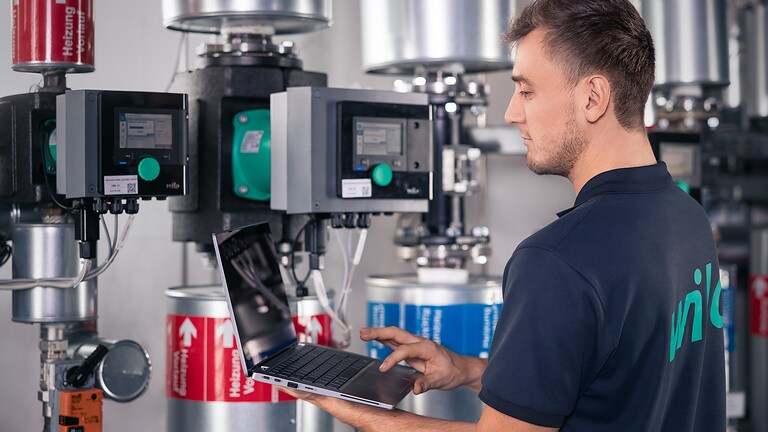
Wilo-Energy Audit
Identify untapped energy saving potential and develop customised solutions for sustainable efficiency.
Health requires more than medicine
Behind every diagnosis, every operation, and every recovery lies an infrastructure that must function seamlessly. Pump systems from Wilo ensure exactly this: maintaining the correct temperature in operating rooms, supplying hygienically safe water, and enabling safety systems to operate in emergencies. This creates environments where doctors can work effectively, nurses can depend on their equipment, and patients can recover with confidence.
But our ambition goes further: we help hospitals conserve resources, reduce emissions, and take responsibility for future generations. In this way, we connect innovative technology with a clear purpose—to enable people to enjoy a healthy present and a secure future.

FAQ | Frequently asked questions about pumps and pump systems in hospitals
Why are pump systems so important for hospital operations?
How quickly do investments in new pumps pay for themselves?
How does Wilo support decision-making?
The Wilo-Energy Audit provides hospitals with a transparent analysis of their entire system, including potential assessments, economic efficiency analyses, and CO₂ savings forecasts. This is supplemented by lifecycle cost analyses, simulations, and personalised consultation—offering a clear basis for investment decisions.
What funding opportunities are available?
How does Wilo contribute to achieving sustainability goals?
How can the security of supply in healthcare facilities be ensured in the long term?
How complex is it to replace old pumps during ongoing operations?
What role does hygiene play in pump technology?
Hygiene plays a key role in all pump applications—particularly where water quality and supply security are directly linked to human well-being. In the areas of drinking water and firefighting, Wilo systems ensure continuous cold water circulation, preventing stagnation and meeting the requirements of the relevant DIN standards (DIN 1988-500 and DIN 144). This is a vital contribution to the prevention of Legionella bacteria.
How does Wilo support hospitals in the long term?
Wilo supports hospitals throughout the entire lifecycle of their systems—from technical consulting to maintenance and long-term efficiency assurance. Ongoing support, digital monitoring, and individually tailored service packages ensure that systems remain energy-efficient and safe in operation over the long term.
Setting the course now for a future-proof hospital
Seize this opportunity to reduce operating costs sustainably while ensuring the highest level of supply security. Contact our team of experts—we will support you from analysis through to implementation.
Contact our experts