















































































Application and selection options
Targeted data mining in Building Services.

Application Configurator
Use our configurator to find out which control type is right for your application.
read more
Discover Wilo-World
Get to know our application areas in our interactive Wilo-World.
Discover the Wilo-World nowExample: Constant differential temperature
Disadvantages of conventional wiring/control
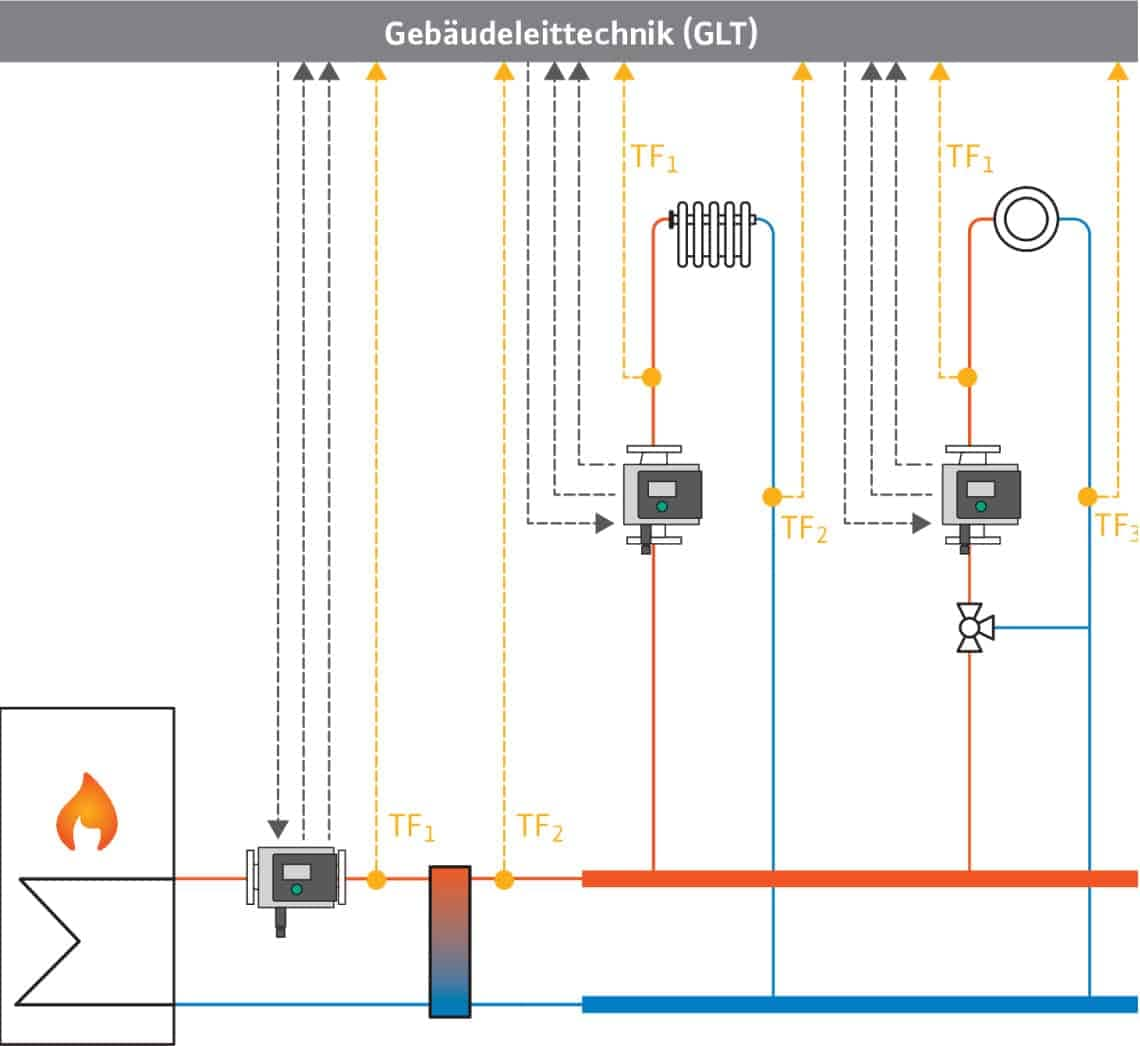
- Analogue data items
- Temperature controlled centrally in the building management system
- Required accessories per pump:
2 x temperature sensor
System information:
- Pump on/off, feedback missing
- Collective fault signal
- Feed temperature
- Return temperature
- Hours of operation, derived
Disadvantages of conventional cabling
- Lots of cabling work and additional costs
- Analogue control parameters have to be entered separately (e.g. temperature)
- Star-connected wiring of fault and run signals
- High degree of wear due to frequent activation and deactivation of the pumps
Advantages of bus-compatible cabling/control
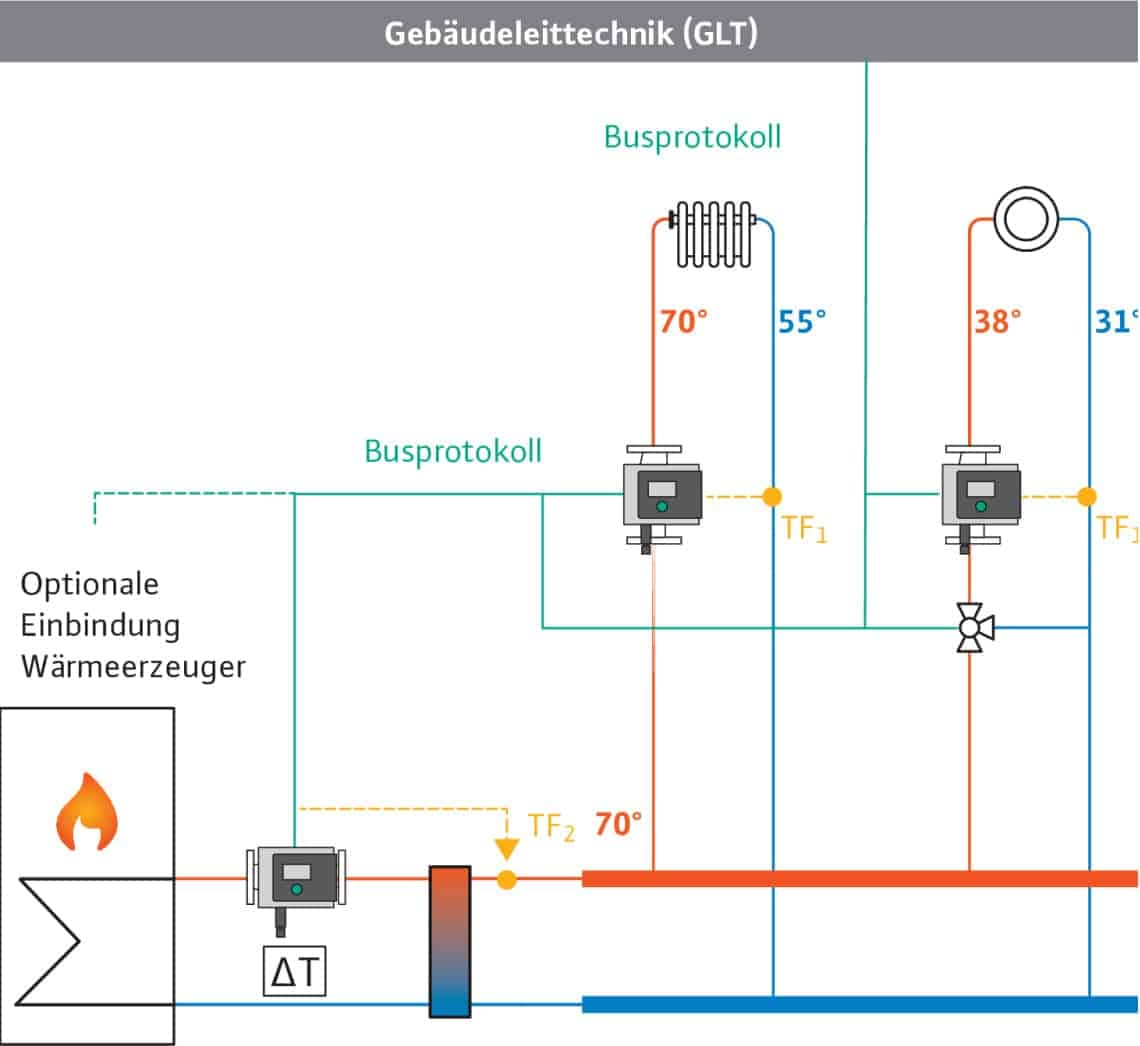
- Digital data items
- Temperature controlled decentrally in the pump
- Required accessories per pump:
1 x temperature sensor PT1000-AA, 1 x Wilo CIF module
System information
- Volume flow
- Delivery head
- Operating hours
- Feed temperature
- Return temperature
- Digital inputs
- Operating status of the system
- Heating/cooling quantity
- Fault and run signals including index
- …
Advantages of bus-capable cabling:
- Considerably less cabling work and costs
- Low fire load because of simple cabling
- Decentral control within the pumps
- High energy savings due to needs-based control of the pumps
- Digital processing of data items and queries for virtual data item (e.g. heating/cooling quantity)
- One language between the building management system and all pumps
- Simple commissioning, modular and decentral, via the pump display