


















































































How Can Sewage Transport Be Future-Proofed?
11.23.2026
Wastewater systems must reliably transport increasingly challenging media while keeping energy use, maintenance requirements, and operating costs under control. Higher solids content, fibrous materials, longer retention times, abrasive or aggressive wastewater, and changing flow conditions can all place additional demands on sewage pumping stations and wastewater infrastructure.
So, how can sewage transport be future-proofed?
Future-proof sewage transport starts with selecting pumping technology that can handle changing wastewater conditions reliably and efficiently. This includes improving solids handling, reducing the risk of clogging, optimizing energy consumption, and using intelligent monitoring and control where the application requires it
Why Is Reliable Solids Handling Important in Sewage Transport?
Solids and fibrous materials are a major challenge in wastewater transport.
Changing wastewater composition, including increased solids content, can contribute to deposits, pump clogging, malfunctions, and additional service requirements. Irregular flow conditions in pressure drainage systems can also increase the risk of deposits and clogging within the piping.
One approach is to reduce problematic solids before they enter the pressure pipe.
The Wilo-Rexa PRO-S is a submersible sewage pump designed for pressure drainage in commercial and municipal applications. Its radial macerator uses a double-shear effect to shred solids, helping reduce the risk of clogging. The optimized combination of hydraulics and macerator is designed to provide high delivery heads with efficient operation.
The Wilo-Rexa PRO-S can also be used with smaller piping, helping reduce overall installation costs where the application allows.
For wastewater infrastructure planning, this highlights an important point: future-proof sewage transport begins with matching the pump and hydraulic design to the wastewater and application.
Why Is Reliable Solids Handling Important in Sewage Transport?
How Can Intelligent Sewage Pumps Help Prevent Clogging? Solids handling is only one part of reliable wastewater transport. Intelligent pumping technology can also help a sewage pumping station react to changing conditions.
The Wilo-Rexa SOLID-Q with Nexos Intelligence takes this approach by integrating intelligent functions into the sewage pumping system.
Nexos Intelligence can detect the threat of clogging caused by solids and initiate an automatic cleaning process. This self-cleaning functionality is designed to increase operational reliability while reducing service requirements. Instead of relying solely on intervention after a blockage occurs, intelligent sewage pumping can allow the system itself to respond to developing operating conditions.
How Can Intelligent Sewage Pumps Help Prevent Clogging?
Solids handling is only one part of reliable wastewater transport. Intelligent pumping technology can also help a sewage pumping station react to changing conditions.
The Wilo-Rexa SOLID-Q with Nexos Intelligence takes this approach by integrating intelligent functions into the sewage pumping system.
Nexos Intelligence can detect the threat of clogging caused by solids and initiate an automatic cleaning process. This self-cleaning functionality is designed to increase operational reliability while reducing service requirements.
Instead of relying solely on intervention after a blockage occurs, intelligent sewage pumping can allow the system itself to respond to developing operating conditions.
How Can Sewage Pumping Stations Reduce Energy Consumption?
Energy consumption is another important consideration when planning sewage transport for the long term.
The Wilo-Rexa SOLID-Q combines high hydraulic efficiency with motor technology reaching efficiency levels up to IE5, based on IEC 60034-30-2. Nexos Intelligence can also automatically determine an optimum duty point and use intelligent speed control to support efficient system operation.
This shifts the focus from evaluating the efficiency of the pump alone toward considering how efficiently the entire pumping system operates under changing conditions.
For wastewater utilities and operators, that distinction matters. A future-ready sewage pumping station must not only move wastewater reliably, but also operate efficiently across its expected range of conditions.
What Role Does Connectivity Play in Future-Proof Sewage Transport?
Connected pumping technology can provide operators with greater visibility into the operation of a sewage pumping station.
The Wilo-Rexa SOLID-Q with Nexos Intelligence features digital connectivity that allows the system to communicate with other components of a smart wastewater pumping station. Operating information can also be transferred to a control system or cloud environment for further analysis.
This combination of pumping technology, intelligent control, and connectivity provides a foundation for smarter monitoring and optimization of sewage pumping operations.
What Makes a Sewage Transport System Future-Ready?
There is no single pump or technology that makes every sewage system future-proof. Wastewater conditions, flow rates, delivery heads, solids content, system design, and operating requirements all influence the appropriate solution.
However, several characteristics are becoming increasingly important:
- Reliable solids handling to address challenging wastewater and fibrous materials.
- Clog prevention and operational reliability to help reduce disruptions and service requirements.
- Energy-efficient operation across changing system conditions.
- Intelligent controls and monitoring that allow pumping systems to respond to operating conditions.
- Connectivity that provides greater visibility into pump and pumping-station operation.
For pressure drainage applications with challenging solids, the Wilo-Rexa PRO-S provides maceration and efficient wastewater transport. For intelligent sewage pumping stations, the Wilo-Rexa SOLID-Q with Nexos Intelligence combines reliable hydraulics with clog detection, automatic cleaning, system optimization, and connectivity.
By considering solids handling, reliability, energy efficiency, intelligent control, and connectivity together, wastewater operators can design sewage transport systems that are better prepared for changing requirements over the long term.
FAQ
How can sewage pump clogging be reduced?
Sewage pump clogging can be addressed through proper pump selection and hydraulic design based on the solids and fibrous materials present in the wastewater. Technologies such as the Wilo-Rexa PRO-S use maceration to shred solids, while the Wilo-Rexa SOLID-Q with Nexos Intelligence can detect the threat of clogging and initiate an automatic cleaning process.
What is an intelligent sewage pump?
An intelligent sewage pump combines pumping technology with monitoring and control functions that allow it to respond to changing operating conditions. The Wilo-Rexa SOLID-Q with Nexos Intelligence incorporates functions such as clog detection, automatic cleaning, intelligent speed control, and connectivity.
What is pressure drainage in wastewater systems?
Pressure drainage uses pumping equipment to transport wastewater through a pressurized piping system. The Wilo-Rexa PRO-S is specifically designed by Wilo for reliable pressure drainage in commercial and municipal applications.
How can sewage pumping stations become more energy efficient?
Energy efficiency can be improved through efficient hydraulics, high-efficiency motors, appropriate pump selection, and controls that adjust pump operation to actual system requirements. The Wilo-Rexa SOLID-Q, for example, combines high hydraulic efficiency, motor technology reaching up to IE5 efficiency levels, and intelligent speed control.
-
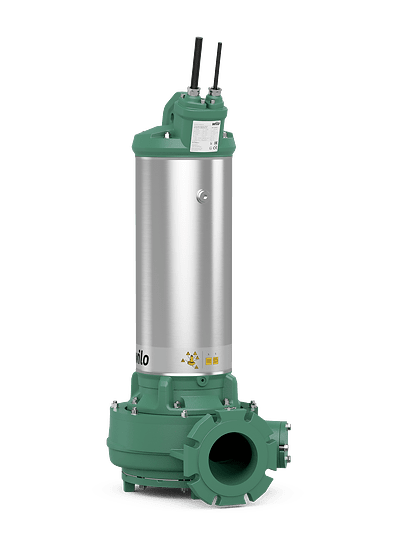
Rexa SOLID
-

Rexa PRO-S