


















































































The City of Plant City Water Reclamation Facility
Oxidation Ditch Mixer Replacement & Installation
Project Overview
With a capacity of 10 MGD (million gallons per day), and a peak flow factor of 27 MGD, The City of Plant City WRF (Water Reclamation Facility) manages wastewater treatment for both local residential and nearby commercial customers. The facility uses a “racetrack-shaped” oxidation ditch, originally designed by Malcolm-Pernie Environmental Engineering Firm (now ARCADIS), based in White Plains, NY, for their activated sludge biological treatment process. The oxidation ditch is a key component of the overall biological treatment process, where consistent mixing is essential to keep solids in suspension and ensure effective interaction between wastewater and the microorganisms responsible for consuming harmful bacteria.

For years, the facility depended on legacy competitor submersible mixers. Although the units were routinely maintained, design limitations in mechanical sealing systems, used specifically for motor protection functions, and serviceability, continued to create reliability challenges for the Operations & Maintenance Teams.
As maintenance demands increased, the Operations Team shifted their focus beyond the standard repair, and replacement approach and sought mixing equipment engineered for higher efficiency, continuous-duty reliability, and reduced maintenance.
Following the successful installation and long-term operation of a Wilo-TR 226 low-speed submersible mixer, the O&M Team proposed the standardization of all mixers to Wilo as part of a phased upgrade strategy.
“We originally installed one Wilo TR 226 low-speed mixer as a replacement,” explained Tony Bauer, Electrical Mechanical Superintendent for the City of Plant City. “It lasted longer than any of the others we had running, and that gave us the confidence to continue replacing the rest.”
The Challenge
Plant City’s original competitor mixers were rebuilt multiple times due to recurring mechanical seal failures, in most cases, resulting in catastrophic motor damage.
In traditional mixer designs, mechanical seal failure often results in water intrusion directly into the motor chamber. These failures frequently lead to extensive motor damage, increased repair costs, and unplanned equipment downtime, often resulting in major disruptions within the wastewater treatment process. “The seal failures were a big issue,” Bauer said. “Once the seal failed, it could lead to the motor burning up.”

Accessibility to the original equipment also posed a challenge. The legacy mixers required dismantling of the blades to remove them from the elevated walkway(s). To further complicate the removal process, the legacy equipment was configured with keyed shafts, which require a high-level of technical expertise to disassemble and reassemble, whereas the Wilo mixer blades utilize a simplified bolt-on design making it easier and quicker disassemble and transport.
Furthermore, the process requirements within the oxidation ditch left no margin for inconsistent mixing.
“The mixers play a key role in our processes, providing the mixing that ensures everything entering the basin is properly mixed with the [healthy] bacteria we’re growing in the system,” said Patrick Murphy, Plant City Wastewater Operations. “That circulation is essential for maintaining the biological treatment process.”
The City of Plant City needed a mixer solution that provided both reliability and long-term operating efficiency without compromising process performance.
The Solution
To overcome these challenges, the City of Plant City specified Wilo-TR 226 low-speed submersible mixers, engineered specifically for wastewater treatment applications, as the basin of design for their 2025 Design-Build equipment upgrade initiative.
Rather than relying solely on motor horsepower and high rotational speeds to generate thrust, Wilo TR low-speed mixers are designed around efficiency. Innovative blade geometry, paired with proprietary planetary gear drive technology, allows Wilo mixers to deliver the required thrust output at lower rotational speeds, thereby reducing equipment mechanical stress while maintaining effective media circulation.
Another key differentiator was Wilo’s multi-chamber sealing system, which provides additional layers of protection between the mixed liquids and the mixer motor. This unique internal design significantly reduces the risk of motor damage in the event of a seal issue, intently addressing one of the Plant’s most persistent maintenance problems.
“The reliability and the warranty were big drivers for us,” Bauer said. “The internal design with multiple chambers for the seal system gives us more protection compared to what we had before.”
The Wilo TR 226 mixers were configured to integrate seamlessly into the original design. By fitting the existing guide rail system, the city was able to avoid major modifications to the mast systems during installation.
Once the oxidation ditch(es) was drained, the contracting construction crews installed nearly 18 Wilo mixers over a three day period. “Other than some wiring changes in the control cabinets, it was pretty much plug-and-play,” Bauer explained.
Wilo and channel partner support teams were on site during startup and commissioning to verify performance and ensure proper operation.
Featured Product
-
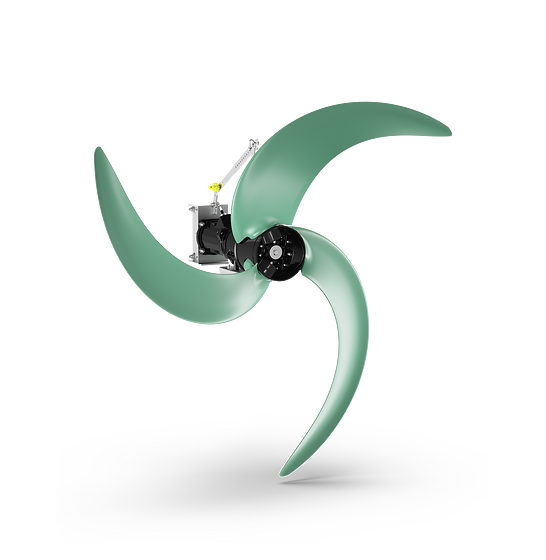
Wilo-EMU TR 216… – TR(E) 326…
Back to Case Studies
Go Back