


















































































Wet-Pit versus Dry-Pit Installations: Submersible Pump Installation Basics
Different types of installations are used for submersible pump systems in municipal and industrial applications. In water management systems, pumps can be installed in either wet-pit or dry-pit configurations. These setups differ significantly in design, operation, and suitability for specific applications. Understanding these differences is key to selecting the right solution for your system’s needs.
The two main submersible installation types are:
- Wet-pit installation
- Dry-pit installation
Wet-Pit Installation
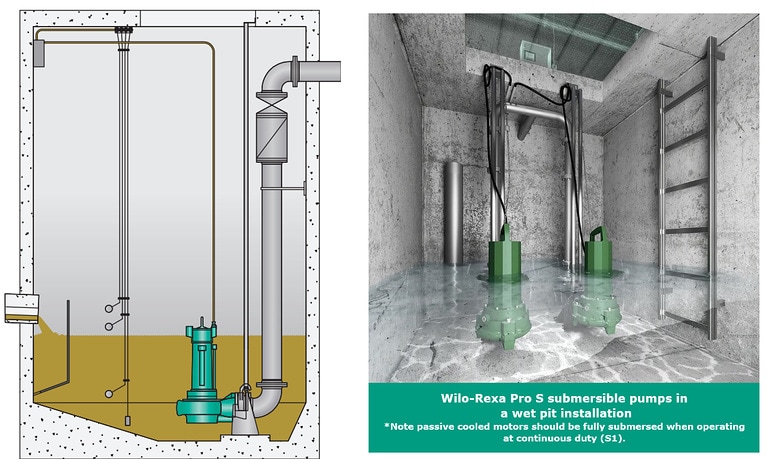
With wet-pit installations, the pumps are submerged in the liquid being pumped, typically located in a pit (or wet well). The motor is cooled through passive cooling, relying on the surrounding pumped liquid to absorb and dissipate heat directly from the motor casing.
Wet-pit installations can be found in sewage and wastewater treatment plants, stormwater management, and industrial systems pumping contaminated fluids.
Advantages
- Space-efficient as the pump is located within a pit.
- Quieter operation, as sound is dampened by the liquid.
- Lower investment costs.
- Handles solids, debris, and contaminated liquid effectively.
- Pumps are installed vertically.
Limitations
- Maintenance can be challenging, requiring pump removal for repairs.
- Fluid can only be lowered to a certain level, since optimum cooling of the motor is only possible in submerged conditions.
- Constant exposure to liquid can lead to corrosion or wear.
- Requires high quality seals to prevent leakage.
Pumps can be either stationary or portable in wet-pit installations. In a stationary design, the pump is attached to a guide rail / base system within the pit. They are suited for installations requiring reliability and integration with existing infrastructure, such as municipal wastewater plants or industrial applications.
Portable systems are ideal for emergency or short-term operations where flexibility and mobility are critical. They are commonly used for tasks such as emergency drainage, residual water removal, or temporary pumping needs. These systems are specifically designed for rapid deployment and efficient performance in situations requiring adaptability.
Dry-Pit Installation
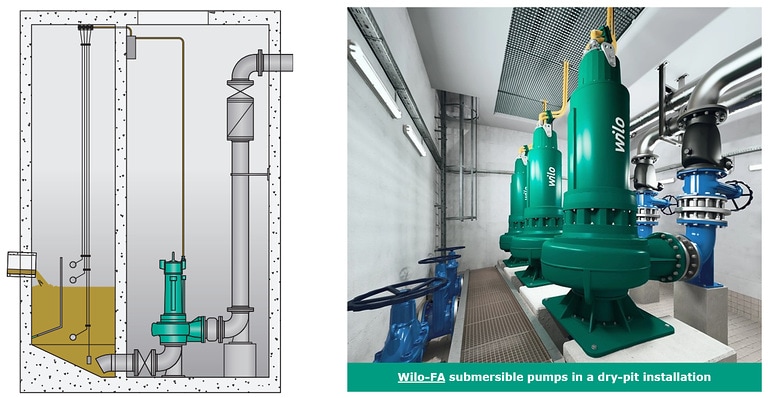
A dry-pit submersible pump is installed in a dry, easily accessible area near the liquid source, typically within a pump room or enclosure adjacent to the liquid being pumped. Dry-pit submersibles can also be located outside in the elements with no enclosure. Unlike wet-pit installations where pumps are submerged, dry-pit setups rely on active cooling systems, such as encapsulated motor with closed-circuit cooling, to manage heat effectively without direct liquid immersion.
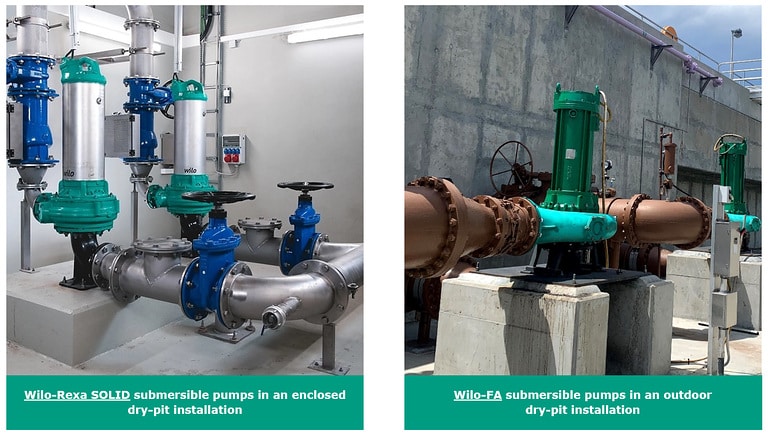
Dry-pit installations can be found in sewage and wastewater treatment plants, industrial processes involving clean or treated liquids, and flood control systems where easy maintenance access is essential.
Advantages
- Accessible pump chamber for easier maintenance.
- Pumps can be monitored and repaired quickly, even under hygienic conditions.
- Remains operational in case of flooding.
- Internal cooling system eliminates the need for external cooling mechanisms.
- Controlled environmental conditions reduce motor damage risks and extend equipment lifespan.
- Fewer wearing parts like couplings or V-belts, lowering maintenance needs.
- Pump can be installed vertically or horizontally, depending on the pump.
Limitations
- Requires more installation space.
- Higher initial costs are due to structural and system complexity.
- Noisier operation due to exposed motor and pump components.
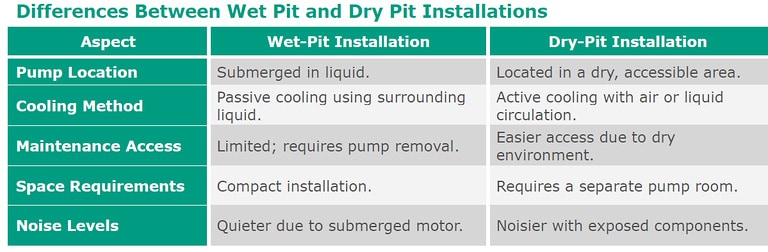
Choosing the Right Installation
When choosing the right installation, consider these factors:
- Liquid Characteristics: Wet-pit systems are ideal for handling solids, debris, and contaminated liquids, while dry-pit setups excel in clean or treated water applications.
- Space Availability: Wet-pit installations save space, while dry-pit systems require separate enclosures.
- Maintenance Needs: Dry-pit installations offer easier access for maintenance, reducing downtime.
- Budget: Wet-pit systems typically have lower pump costs due to their simply motor construction but may have higher installation costs due to digging and enclosing a pit. Dry-pit setups involve higher initial investment in the pumps but offer long-term reliability.
Conclusion
Both wet-pit and dry-pit installations have their unique strengths and limitations. The choice between the two depends on the specific requirements of the application, including liquid type, space constraints, maintenance accessibility, and budget. Selecting the right installation ensures efficient operation and long-term system reliability.
Wilo is Your Solution Provider
As a leading solutions provider in the water management segment, Wilo offers a comprehensive range of submersible pump systems and services designed to meet diverse application needs. With a strong commitment to innovation and reliability, Wilo helps you optimize your water management systems, ensuring efficiency, sustainability, and long-term performance.
Featured Products
-
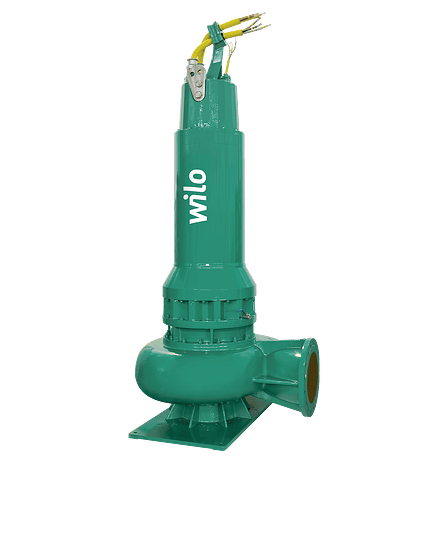
Wilo-FA
-

Wilo-Rexa SUPRA
-
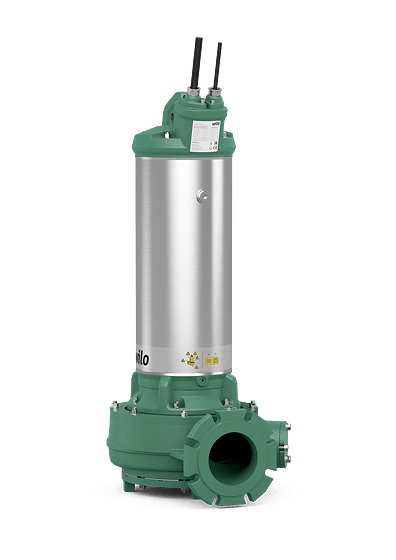
Wilo-Rexa SOLID

