Multilateralism, not isolation: Europe’s economic future is currently being decided
Europe – and specifically Germany – is standing at a strategic crossroads. In a world of increasing geopolitical tensions, growing trade conflicts and economic uncertainty, a protectionist industrial policy seems to be an appealing answer for some people. An EU “Buy European Act” would not be a protective shield, however, but would rather add fuel to the fire.
The future of Europe will not be decided by tariffs, walls or market isolation, but by its ability to form global partnerships that bring about consistent multilateralism within the framework of clear geo-economic and industrial policy guidelines originating from Berlin and Brussels.
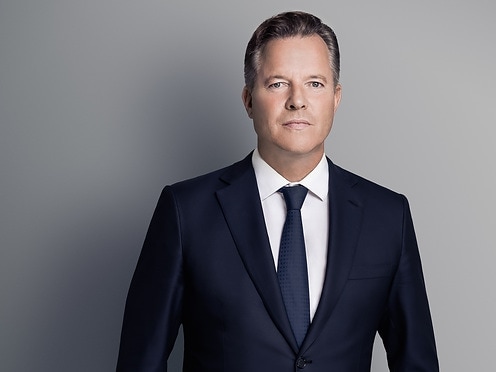
Oliver Hermes is President & Global CEO of the Wilo Group, Chairman of the Board of Trustees of the Wilo-Foundation, Honorary Consul of the Republic of Kazakhstan in North Rhine-Westphalia, Deputy Chairman of the Near and Middle East Association (NUMOV), Member of the Board of Trustees of the Foundation for Family Businesses, Member of the Board of Trustees of the Africa Association of German Business, and Member of the Executive Board of the Sub-Saharan Africa Initiative of German Business (SAFRI). He is an essayist with articles published in independent media.

Protectionism as a driver of inflation
A “Buy European Act” tying public contracts or funding instruments to European origin is a prime example of short-term political thinking. In the long term, however, it would increase prices, distort competition and drive inflation. Competition is not an ideological principle, but a disciplinary mechanism: If it no longer exists then costs rise and consumers and companies end up footing the bill.
Furthermore, such a step would also fuel the protectionist spiral. Trade barriers create counter-barriers. What might begin as a protective measure often becomes a chain reaction of mutual isolation. Europe would therefore allow itself to be drawn into the very maelstrom that it would do best to avoid.
A strategic framework in place of mercantilism and statism
A “Buy European Act” would be an expression of a paradigm shift in economic policy: a return to mercantilism and stronger state control of economic processes. However, the way in which modern economies function does not follow the logic of the 17th century. It is not possible to artificially create prosperity by forcing trade surpluses or ensuring administrative favouritism in respect of domestic suppliers.
Nor can this be engendered through permanent statism, i.e. an expansion of micro-managed state control of investment and production decisions. This does not mean, however, that the state may retain a passive role. On the contrary: geo-economic and industrial-strategic framework conditions must be actively put in place by Berlin and specifically by Brussels.
Europe needs:
a coordinated raw materials strategy (the EU is completely dependent on imports for 10 out of 26 critical raw materials);
the targeted diversification of critical supply chains;
a cross-border make-or-buy investment strategy;
technology-open innovation promotion; and
common standards in key industries.
The state is responsible for setting the regulatory framework. It defines the code of rules, protects competition, secures infrastructure, encourages research and prevents strategic vulnerabilities. What it should not do, however, is permanently replace markets or systematically eliminate competition.
The social market economy has always been strong because it linked together regulatory policy with the notion of openness, rather than linking compartmentalisation to a state-controlled economy.
"While production sites formally remained in place, strategic control and capital flows shifted elsewhere."
Acceleration of the silent sell-off
Many unlisted German and European companies are already undergoing a gradual change of ownership with international investors acquiring strategically relevant SMEs in order to secure technology, market share or production capacity.
Paradoxically, a “Buy European Act” could actually intensify this trend. If market access and funding conditions were increasingly linked to European production locations, this would create a strong incentive for non-EU companies to directly take over European companies.
They could then circumvent regulatory hurdles and “purchase” vertical integration.
The result would be an undermining of the European economy from within.
While production sites formally remained in place, strategic control and capital flows shifted elsewhere.
End-to-end value creation is both an illusion and politically dangerous
The notion that complete “end-to-end” value chains can be mapped nationally or regionally in a complex global economy is not only economically and technologically unrealistic, it is also dangerous. Modern industries thrive on the international division of labour, specialisations and global networks.
The geo-economic reality does not require entire supply chains to be replicated within a single region, but rather the orchestration of global activities. Anybody who attempts to fit the global production system into Europe will lose economic mass, speed of innovation and technological connectivity.
Resilience is not formed through self-sufficiency, but through diversification – not through isolation, but through partnerships. Strategic robustness means multiple sources of supply, multiple sales markets, multiple alliances.

Free trade as a strategic instrument
Multilateralism is not naïve idealism; rather, it is an instrument of power politics. Networking trading areas creates dependencies and therefore stability.
The agreement with the South American confederation Mercosur must be immediately, if temporarily, brought into force. This would send out a clear signal that Europe is opening up markets while others are closing.
And this is precisely why the trade agreement with Mercosur (where the trade volume totalled €111 billion in 2024) must be given a kickstart. It will bring together over 700 million people to form one of the largest free trade areas in the world.
Existing and negotiated agreements must also be implemented or ratified on a faster scale, such as CETA with Canada, the partnerships with Indonesia and the United Arab Emirates, and an ambitious agreement with India.
Speed forms the strategy in these instances since those who build alliances, while others put up walls, will become a gravitational centre.
"Those who want to decouple from others, must be decoupled themselves."
Isolation of protectionists, not imitation
The central strategic question is about determining how Europe deals with protectionist states. The answer cannot be to copy their policies since this would drag Europe into the same downwards spiral.
Instead, the following is true: those who want to decouple from others, must be decoupled themselves. Not through knee-jerk counter-sanctions, but through the formation of robust multilateral networks.
When large economic areas connect markets and put in place common standards, compartmentalisation models become structurally disadvantaged.
Europe must not allow itself to be dragged down in the maelstrom – it must come out the other side.
Partnerships build resilience
Economic resilience is created through breadth: diverse suppliers, different sales markets, technological cooperation and strategic alliances. It is generated through a smart framework and not administrative compartmentalisation.
Multilateralism combined with a strategic industrial policy is not a contradiction in terms, but the counter-model to mercantilism and statism.
The choice is clear.
Do not choose protectionist imitation.
Do not choose dirigiste internal orientation.
Instead:
Opt for open markets, clear rules and a strategic framework. Choose partnerships as the foundation of European sovereignty!